
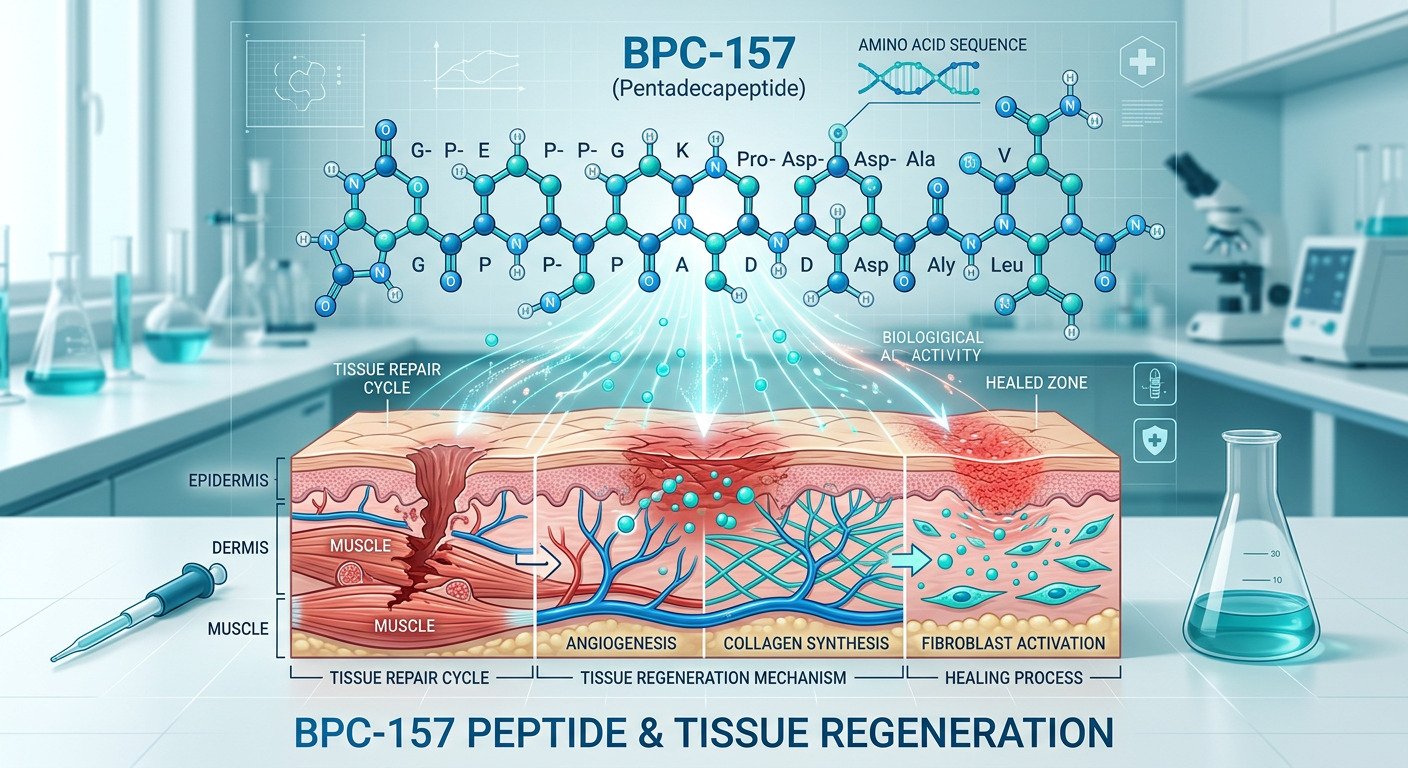
Introduction to Healing Peptides
Healing peptides are short chains of amino acids that have attracted scientific interest for their potential role in tissue repair and regeneration. Some of these peptides occur naturally in the body, while others have been synthesized based on naturally occurring compounds. Researchers have studied several classes of healing peptides for their observed effects on recovery from injury, particularly in animal models.
Unlike many conventional approaches, healing peptides are being investigated for their ability to influence the body's own repair mechanisms at a cellular level. This has led to growing interest in their potential applications across orthopedics, wound care, and gastrointestinal health.
How Healing Peptides Are Believed to Work
Research suggests that healing peptides may promote recovery through several complementary mechanisms:
- Angiogenesis: Certain healing peptides may stimulate the formation of new blood vessels, which is essential for delivering oxygen and nutrients to damaged tissues.
- Collagen production: Studies indicate that some peptides may promote collagen synthesis, a key component of connective tissue that provides structure to tendons, ligaments, and skin.
- Anti-inflammatory effects: Several healing peptides appear to modulate inflammatory responses, potentially reducing tissue damage caused by prolonged inflammation.
- Gut healing: Because some healing peptides were originally derived from compounds found in gastric juice, much of the early research focused on their potential to heal digestive tract tissues.
What Research Has Found
Most studies on healing peptides have been conducted in animal models. Research has explored their potential effects on:
- Tendon and ligament healing
- Muscle injury recovery
- Gastric ulcers and intestinal damage
- Bone fracture repair
- Skin wound healing
While these findings are promising, it is important to note that robust human clinical trials are limited. More research is needed to fully understand the effects, safety, and appropriate applications of healing peptides in humans.
Current Status
Healing peptides are not approved by the U.S. Food and Drug Administration (FDA) or the European Medicines Agency (EMA) as medical treatments. They are primarily available for research purposes. The legal status of these compounds varies by country, and individuals should be aware of the regulations in their jurisdiction.
Key Takeaways
- Healing peptides are short amino acid chains studied for their potential regenerative properties.
- They are believed to work through angiogenesis, collagen production, and anti-inflammatory effects.
- Most research has been conducted in animal models, with limited human trials.
- They are not approved medical treatments in the USA or EU.
- Anyone considering peptides should consult a qualified healthcare professional.
This article is for educational purposes only and does not constitute medical advice. See our Disclaimer for more information.