
What Are Longevity Peptides?
Longevity peptides are a class of short amino acid chains studied for their potential to influence the aging process and support long-term health. Researchers have investigated these peptides for their interactions with cellular mechanisms associated with aging, including telomere maintenance and hormone regulation.
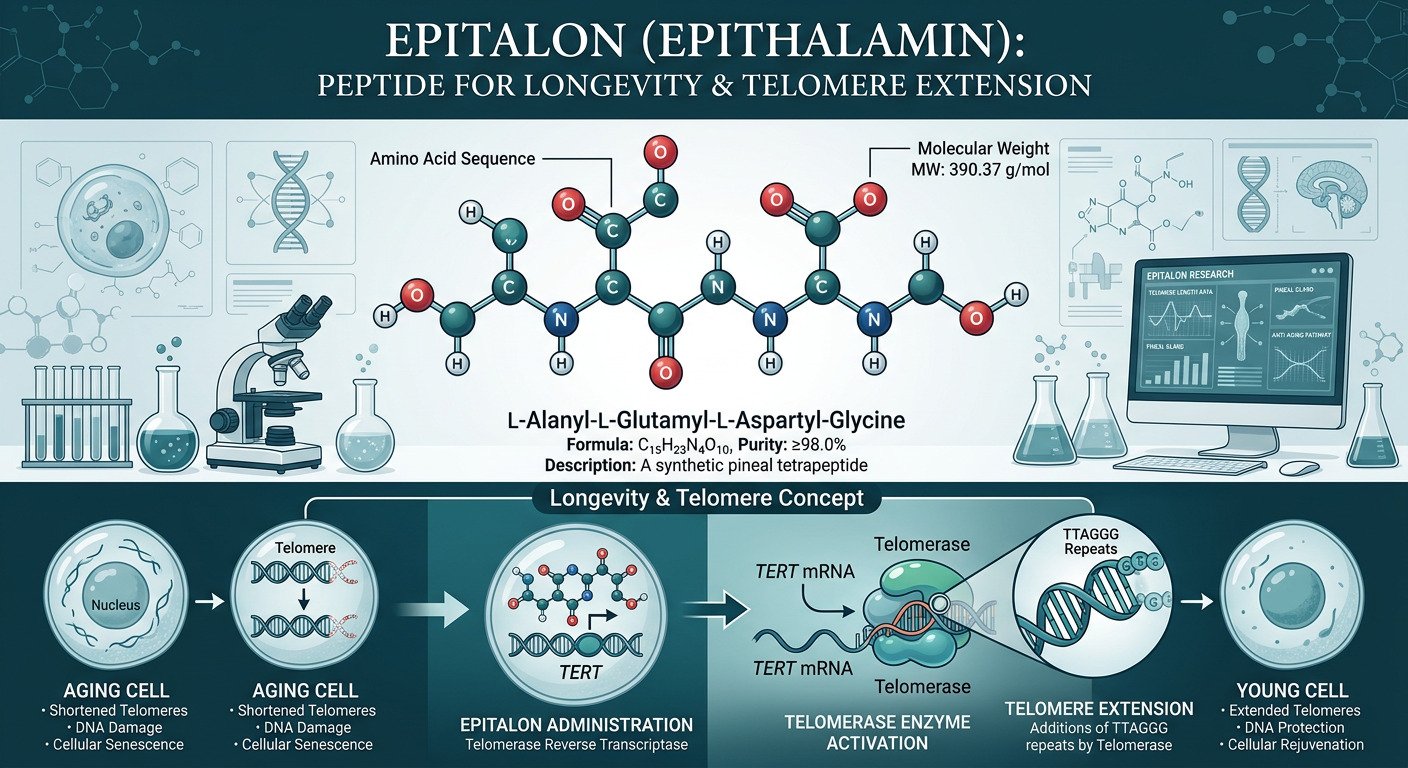
Telomeres are protective caps at the ends of chromosomes that shorten as cells divide. The study of how peptides might influence telomere length and cellular aging has become an active area of longevity research.
How Longevity Peptides Are Believed to Work
Research suggests that longevity peptides may influence aging-related processes through several mechanisms:
- Telomerase activation: Some longevity peptides are studied for their potential to activate telomerase, an enzyme that helps maintain telomere length, which may support cellular longevity.
- Pineal gland regulation: Certain peptides in this category may interact with the pineal gland, a small structure in the brain involved in regulating sleep-wake cycles.
- Melatonin influence: Through their effects on the pineal gland, these peptides may influence melatonin production, a hormone involved in sleep and antioxidant defense.
What Research Has Found
Studies on longevity peptides have explored their potential effects on:
- The aging process and cellular senescence
- Longevity and lifespan in animal models
- Immune function and resilience
While these findings are intriguing, robust human clinical trials remain limited. More research is needed to fully understand the effects, safety, and appropriate applications of longevity peptides in humans.
Current Status
Longevity peptides are not approved by the U.S. Food and Drug Administration (FDA) or the European Medicines Agency (EMA) as medical treatments. They are primarily available for research purposes. The legal status of these compounds varies by country, and individuals should be aware of the regulations in their jurisdiction.
Key Takeaways
- Longevity peptides are studied for their potential to influence aging and cellular health.
- They are believed to work through telomerase activation and pineal gland regulation.
- Research has explored their effects on aging, longevity, and immune function.
- They are not approved medical treatments in the USA or EU.
- Anyone considering peptides should consult a qualified healthcare professional.
This article is for educational purposes only and does not constitute medical advice. See our Disclaimer for more information.